
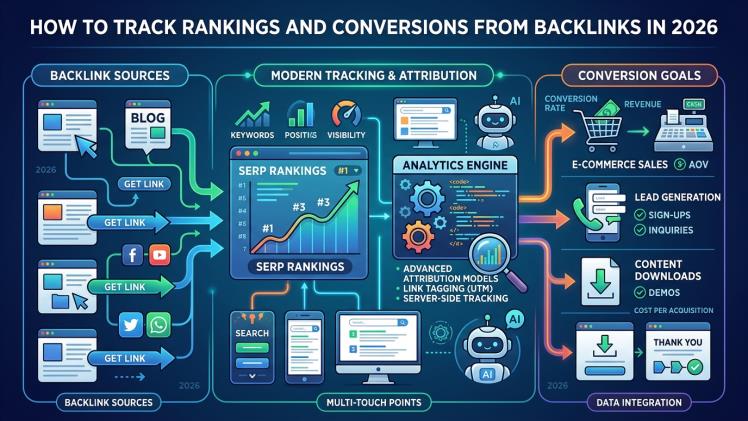
Backlinks can help an online store earn visibility, but a rising link count does not automatically mean more customers. To understand whether link-building is working, businesses need to track rankings and conversions from backlinks together. That means looking beyond the number of websites linking to a store and asking whether those links help shoppers discover relevant products, visit useful pages, and complete purchases.
This is especially important for ecommerce sites, where links may point to a homepage, a category page, or a specific product. Each destination serves a different purpose, so measurement should connect the link’s source and landing page with the results that follow.
Start with a clear link-building goal
Before assessing performance, decide what a backlink campaign is intended to achieve. A campaign for a new product category might aim to improve its search visibility. A campaign for an established product might focus on bringing in shoppers who are ready to compare options. Those goals call for different measures.
- Visibility: Are the linked-to pages appearing more often for relevant searches?
- Qualified visits: Do visitors from referring websites engage with the page and explore the store?
- Business results: Do those visits contribute to purchases, enquiries, or another meaningful action?
Set a baseline before starting outreach. Record current rankings for a small set of relevant search terms, along with organic traffic and conversion activity for the pages you plan to promote. This makes it easier to compare later results without crediting a new link for changes that were already underway.
Track the pages that links actually support
A backlink is most useful when its destination matches the context of the referring page. A guide about choosing running shoes, for example, may naturally point to a running-shoe category rather than a store’s homepage. Ecommerce link-building strategies increasingly consider how to earn links to product and category pages, not just broad brand pages. This overview of ecommerce link building discusses that page-level approach.
Keep a record of each link’s referring site, the page that contains it, the destination URL, and the date it was first found. Note whether the link is editorial, part of a partnership, or associated with another campaign. This simple record helps connect performance changes to the right pages and provides context if a link later changes or disappears.
Measure rankings without relying on a single snapshot
Search positions fluctuate, so one day’s ranking is not a verdict on a campaign. Monitor a consistent group of search terms over time and separate branded searches from non-branded ones. Branded terms can rise because more people have heard of the store; non-branded terms may better show whether a category or product page is gaining visibility for the wider market.
Compare trends across several weeks or months, and look at the actual landing pages appearing in search results. A category page might improve for broad shopping queries while an individual product page gains visibility for a specific model or feature. Also consider seasonal demand, stock availability, site changes, and other marketing activity. Backlinks can contribute to rankings, but they are only one factor among many.
Connect referral visits to conversions
Analytics tools can show visits arriving from other websites, the pages people land on, and whether they go on to make a purchase. Use campaign tracking parameters for links where appropriate, particularly when a placement is part of a planned outreach effort. For editorial links that cannot be tagged, referral reports and landing-page data can still help reveal patterns.
Do not judge a link only by immediate sales. A visitor may read a product comparison, leave, and return later through another channel. Review both direct referral activity and assisted conversions where your analytics setup supports them. Useful measures include conversion rate, average order value, revenue, email sign-ups, and add-to-cart activity. Choose measures that match the campaign goal rather than reporting every available number.
Use a joined-up workflow
Consistent monitoring takes time. A digital marketer may research relevant publications, coordinate content, check link placements, and analyze traffic and search performance. If you are learning what a freelance digital marketer does, the role often includes connecting these separate tasks into a clear plan. Osdire, a marketplace where businesses can hire freelancers across areas such as writing, marketing, and design, is one example of where companies may explore outside support.
Whether the work is handled in-house or with a freelancer, agree on the reporting schedule and definitions first. A concise monthly review can list new links, changes in target-page rankings, referral visits, and conversions, with notes on other changes that may have affected results. This helps the team spot useful patterns without mistaking correlation for proof that one link caused a sale.
Focus on relevance and lasting value
The strongest link-building measurement combines quality with outcomes. A relevant mention that sends a modest number of interested visitors may be more valuable than a high-volume link from an unrelated site. Check that the landing page answers the visitor’s likely question, works well on mobile, and clearly presents product details, availability, and next steps.
Over time, tracking rankings and conversions from backlinks gives ecommerce businesses a more balanced view of performance. It shows whether link-building is improving discovery, attracting the right audience, and supporting business goals—while giving teams evidence to refine their next campaign.